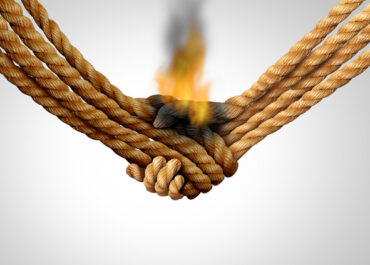

“In a breach of contract dispute, the three most important things are Damages, Damages, and Damages. While law schools teach the theory of a breach, nearly 40 years of experience has taught us the reality: success is determined by bargaining power, the timing of your strategy, and your ability to actually collect on a judgment.” – Dan Watkins

The Nature and Consequence of a Breach of Contract

A breach of contract occurs when a party fails to fulfill a specific obligation—whether through non-payment, failure to perform, or unmet workmanship standards—without a valid legal excuse. In California, a breach is more than a broken promise; it is a disruption to your business infrastructure that carries immediate financial and operational risks. At the Watkins Firm, our approach is built on identifying the root cause of the dispute, assessing potential damages, and establishing the leverage necessary to protect your interests through negotiation or litigation.

Question: What constitutes a material breach of contract?

Answer: A material breach is a failure to perform an obligation so significant that it destroys the value of the agreement for the other party, providing grounds for legal action and potential damages.

Where are you in the contract process, and is the contract already in breach?

Whether you are the victim of a contract breach, the party working to perform, or both sides carry a portion of the responsibility, your priority is to stabilize the situation. It might comfort you to know Watkins Firm is able to resolve the vast majority of breach of contract matters through effective, leveraged negotiation. This is consistently the fastest and most cost-effective path to protecting your business interests.  Let’s help get things moving in the right direction.

In order to provide the most effective guidance at this point, please select the description that best matches your current situation:

I am concerned about the actions of a contract partner.
Business disruptions require a clear chronology and an immediate assessment of financial impact. Has the breach already occurred?
I am concerned about the ability to fulfill contractual obligations.

Real-world developments—from supply chain shifts to financial changes—often create obstacles to performance. Protecting your position requires immediate, structured communication.

The lines are blurred (Both parties may share responsibility).

Complex disputes where obligations are unmet on both sides require a sophisticated assessment of leverage. Do not let uncertainty lead to inaction.

The Reality of the Breach: Beyond the Law Books

Most business owners focus solely on the fact that an agreement was broken. However, our experienced breach of contract attorneys look at the “subtle things” that determine the true outcome of a case:

  • Bargaining Power: Who holds the leverage in the current relationship?

  • Collectability: Is the breaching party a “shell” corporation with no assets, or do they have the resources to fulfill a judgment? In other words, is the battle worth the fight?

  • Timing: Should you sue now to stop the bleeding, or wait to maximize your strategic position?

  • Reputation & Reciprocity: How will a lawsuit affect your standing in the industry, and are you prepared for a potential counter-claim?

At the Watkins Firm, we don’t just ask if a breach occurred; we ask what a victory actually looks like for your bottom line.

What are the 3 Most Important Takeaways in a California Breach of Contract Dispute?

  • Effective Tools Help California Employers to Prevent LawsuitsNot every problem is a breach of contract.
    A delay, disagreement, or obstacle to performance does not automatically rise to the level of a legally actionable breach. The specific terms of the agreement—and whether they were materially violated—control the analysis.

  • The type of breach determines the strategy.
    There are important distinctions between minor, material, fundamental, and anticipatory breaches. These classifications affect available remedies, legal exposure, and the most effective path toward resolution.
  • You have a legal obligation to mitigate damages.
    Under California law, the injured party must take prompt, reasonable steps to reduce financial harm. Failure to mitigate can limit or reduce the amount of damages that may ultimately be recovered.

40 Years of Principled Resolution

For more than four decades, the Watkins Firm has served the San Diego and California business community by untangling complex disputes. We don’t just “handle” cases; we deploy a unique approach designed to stop the financial bleeding and restore your business stability.

If you have reviewed the diagnostic paths above and are ready to move from uncertainty to leverage, we invite you to review the strong recommendations of our clients and take the next step.

Contact the Watkins Firm or call (858) 535-1511 for a complimentary and substantive assessment. Be prepared to discuss your specific chronology and the impact on your bottom line.

Immediate Actions Following a Contract Breach

Under California law, the moment a breach occurs, the clock begins to run on your legal options and your duty to mitigate damages. Failure to take reasonable steps to minimize your financial loss can actually reduce the amount you are entitled to recover in court.

Best steps at this point:
Stop all informal “work-around” attempts. Call or schedule a complimentary assessment.  Our attorneys will help you to document the failure to perform immediately in writing. Your priority is to freeze the facts as they exist today to prevent the other party from rewriting the narrative.

Complimentary Assessment Preparation:

  • The Executed Agreement: The most recent version including all signed addendums.
  • Evidence of Failure: Invoices, photos, or emails confirming the non-performance.
  • The Impact Statement: A brief summary of how this breach is disrupting your current operations.

The Next Action Step: Once you have gathered these documents, Schedule Your Complimentary Assessment or call (858) 535-1511 to begin the process of freezing the facts and protecting your financial position.

Strategic Steps for an Anticipatory Breach

If a contract partner has signaled they cannot or will not perform, you are in a high-leverage but high-risk window. If you terminate the contract too early without a legally sufficient basis, you may be found in breach. If you wait too long, you lose the ability to secure a replacement partner.

Best steps at this point: Do not guess at their intent. We help you issue a formal “Demand for Adequate Assurance.” This principled legal tool forces the partner to confirm their ability to perform within a specific timeframe, protecting your right to seek alternative solutions if they fail to provide it.

Complimentary Assessment Preparation:

  • The Warning Signals: Any emails, texts, or notices where the partner expressed doubt about their ability to perform.
  • The Contract Clauses: Specifically any “Time is of the Essence” or “Performance Standard” sections.
  • Correspondence Log: A list of your attempts to get a status update from the partner.

The Next Action Step: Once you have gathered these documents, Schedule Your Complimentary Assessment or call (858) 535-1511 to begin the process of freezing the facts and protecting your financial position.

Resolving a Partial Breach to Maintain Business Continuity

A partial breach—where some work is done but standards are unmet—is the most common source of “blurred lines.” Allowing subpar work to continue without a formal objection can be interpreted as a legal waiver of your rights, making it impossible to seek damages later.

Best steps at this point: You must “object without obstructing.” We guide you in issuing a principled notice of non-conformity. This allows the project to move forward while strictly preserving your right to hold the partner accountable for the financial or quality gap at the conclusion of the contract.

Substantive Assessment Preparation:

  • The Quality Standard: The specific section of the contract defining workmanship or deliverables.
  • Proof of Deficiency: Reports or communications showing where the work fell short.
  • Payments Made to Date: A record of all funds released versus the percentage of work actually completed.

The Next Action Step: Once you have gathered these documents, Schedule Your Complimentary Assessment or call (858) 535-1511 to begin the process of freezing the facts and protecting your financial position.

Navigating a Development that Prevents Performance

When external factors—financial shifts, supply chain disruptions, or labor challenges—prevent you from fulfilling a contract, the window to protect your interests is small. In California, providing advance notification is often a legal necessity; failure to do so can increase your exposure to avoidable damages.

Best steps at this point: Do not wait for the deadline to pass. We help you issue a principled notice of inability to perform. This demonstrates a good-faith attempt to mitigate loss and opens the door for contract modification or a structured, leveraged exit.

Substantive Assessment Preparation:

  • The Specific Clause: Identify the section of the agreement you are concerned about.
  • Documentation of the Event: Records of the external factor (e.g., vendor notice, financial record).
  • Correspondence Log: A list of when you first identified the obstacle.

The Next Action Step: Once you have gathered these documents, Schedule Your Complimentary Assessment or call (858) 535-1511 to begin the process of freezing the facts and protecting your financial position.

Resolving a Disagreement in Contract Interpretation

Most disputes arise not from bad intent, but from a breakdown in expectations. If you perform based on your interpretation while the partner holds a different view, you risk being accused of a “Material Breach,” which could freeze your payments and trigger litigation.

Best steps at this point: Seek clarification through counsel before a formal dispute is declared. We guide you in a principled engagement with the other party to align expectations or document a “reservation of rights,” ensuring your performance continues without compromising your legal position.

Substantive Assessment Preparation:

  • The Ambiguous Term: The specific wording in the contract that is being debated.
  • Past Performance Records: Evidence of how this term was handled previously in the relationship.
  • Partner Correspondence: Emails or notes where the partner expressed their conflicting expectation.

The Next Action Step: Once you have gathered these documents, Schedule Your Complimentary Assessment or call (858) 535-1511 to begin the process of freezing the facts and protecting your financial position.

Navigating a Development that Prevents Performance

When external factors—financial shifts, supply chain disruptions, or labor challenges—prevent you from fulfilling a contract, the window to protect your interests is small. In California, providing advance notification is often a legal necessity; failure to do so can increase your exposure to avoidable damages.

Best steps at this point: Do not wait for the deadline to pass. We help you issue a principled notice of inability to perform. This demonstrates a good-faith attempt to mitigate loss and opens the door for contract modification or a structured, leveraged exit.

Substantive Assessment Preparation:

  • The Specific Clause: Identify the section of the agreement you are concerned about.
  • Documentation of the Event: Records of the external factor (e.g., vendor notice, financial record).
  • Correspondence Log: A list of when you first identified the obstacle.

The Next Action Step: Once you have gathered these documents, Schedule Your Complimentary Assessment or call (858) 535-1511 to begin the process of freezing the facts and protecting your financial position.

Strategic Trajectory: Why Early Decisions Determine the Final Check

Most business owners think the “lawsuit” determines the outcome. This is a mistaken perspective. The outcome is most often determined by the steps taken in the initial days of the dispute.

  • The Notification Phase: How you first express concern over the breach sets the tone for “substantive corrective action.”
  • The Documentation Phase: Facts “frozen” today cannot be rewritten by a partner’s attorney six months from now.
  • The Negotiation Window: We use the math of “Ordinary Damages” to show the other party exactly how much it will cost them to lose in court, often driving a resolution before a single deposition is taken.

The Principled Defense: Protecting Your Equity, Relationships, and Time

An accusation of breach of contract is more than a legal threat; it is a disruption to the very engine of your business. A passive or emotional response often leads to a “war of attrition” that costs more in lost time and fractured relationships than the actual dispute is worth.

How the Experienced, Professional Counsel of Watkins Firm is Required at Each Step

Your experienced Watkins Firm attorney acts as a stabilizer, ensuring that the conflict is managed with surgical precision so you can stay focused on your operations.

  • Preserving Strategic Relationships: Sometimes a breach is a misunderstanding, not an act of malice. We provide a “buffered” communication channel that allows for a principled resolution without permanently burning bridges with valuable vendors or clients.
  • Conserving Executive Time: Litigation is a vacuum for productivity. We handle the “math” and the procedural noise, allowing you to remain the CEO of your company rather than the lead witness in a dispute.
  • Protecting Financial Resources: We identify the most direct path to resolution—whether through a leveraged settlement or an affirmative defense—before the “burn rate” of a protracted legal battle outpaces the value of the contract itself.

The Legal Burden of Mitigation: Your Role in the Recovery

If you are the victim of a breach, the law does not allow you to simply sit back and let the bills pile up.

Under California law, you have a mandatory legal responsibility to mitigate your damages. This means you must take prudent, reasonable action to reduce your losses as soon as the breach is identified.

  • The Consequence of Inaction: If a court finds that you could have saved $10,000 by acting sooner but chose to wait, that $10,000 will be deducted from your final judgment.
  • The Strategy: The failure to mitigate doesn’t just lower your award; it destroys your Bargaining Power. The other party’s defense will center on your failure to act, turning the trial into an audit of your behavior rather than their

The Math of a Breach: Calculating the “Benefit of the Bargain”

Knowing the law is easy; predicting the math of a trial is the hard part. We help you analyze the damages and the cost to fight early, so you can decide if the ‘benefit of the bargain’ is worth the pursuit.” — Dan Watkins

What are Damages in a Business Dispute or Lawsuit - LeverageQ: What Are Damages in a Breach of Contract?

A: In California, damages are the financial mechanism used to put the victim back where they would have been had the contract been fulfilled. This is known as the “Benefit of the Bargain.” To be recoverable, damages cannot be based on “what-ifs” or guesses; they must be factual, documentable, realistic, and knowable.

In California, the primary remedy for a breach of contract is a monetary award designed to give you the “Benefit of the Bargain.” If you cannot prove documentable, factual damages, you do not have a case. To be recoverable, damages cannot be based on “what-ifs” or guesses; they must be factual, documentable, realistic, and knowable.

Whether you are providing notice of a development that prevents performance or documenting a breach that has already occurred, every strategic decision is ultimately measured against the potential for recovery. Success in California litigation is not determined by who is “right,” but by who can prove the math of their loss.
One of the most aggressive levers we use is the “Cost of Cover.” This forces the breaching party to understand they are responsible not just for their own failure, but for the potentially higher price you were forced to pay to find another supplier or provider to achieve your original objectives.

“In a breach of contract dispute, the three most important things are Damages, Damages, and Damages. While law schools teach the theory of a breach, nearly 40 years of experience has taught us the reality: success is determined by bargaining power, the timing of your strategy, and your ability to actually collect on a judgment.” – Dan Watkins

The 4 Pillars of Contractual Recovery - "Damages"

Damage Type

The "Real World Reality"

Liquidated
Damages

The Predictable Path: These are pre-set amounts (e.g., $500/day) written into the contract. They provide the most immediate leverage in a negotiation because the “math” is already agreed upon.

Ordinary
Damages

The Replacement Cost: This is the documentable expense of finding a new supplier or partner. It covers the “gap” between the original price and the price you were forced to pay to get the job done.

Punitive
Damages

The Rare Warning: These are not about your loss; they are about the other party’s bad intent. They are awarded to punish egregious behavior and deter others in the marketplace.

Attorney’s
Fees

The Clause-Dependent Recovery: In California, you only get your fees back if the contract specifically says so, or if they are a direct component of your ordinary damages.

Breach of Contract - Initial Thoughts

Material or Immaterial Breach of Contract

Listen to our Recent Sound Business Insights Podcast:
Episode 5 – Breach of Contract”

Watkins Firm Sound Business Insights - Episode 5 - Breach of Contract


Trusted Guidance, Experienced Advocate: Daniel W. Watkins
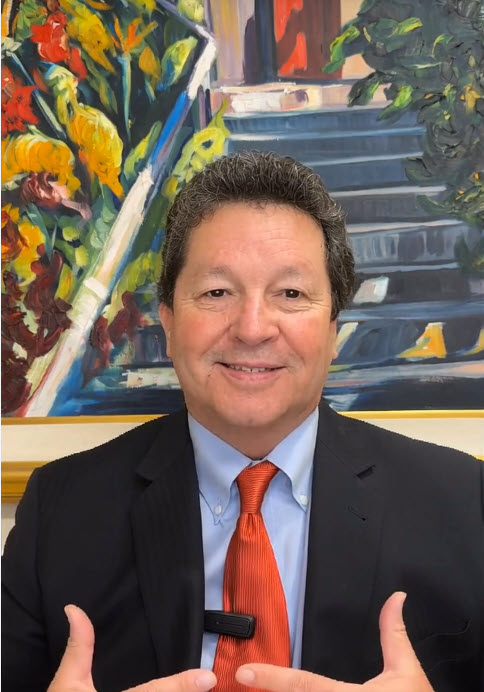
Dan Watkins is a true people person who sincerely listens. He cares deeply about what his clients are going through, which is why his approach is built on digging into the facts to find creative, principled solutions. Dan contributes his insights candidly and constructively, providing the grounded guidance necessary to navigate high-stakes business disputes.

A Proven Record

A trusted litigation strategist since 1987, Dan is a true trial attorney with over 50 jury and bench trials to his credit. He has successfully represented both large corporations and individuals in well-publicized trials throughout California and the U.S.

His experience isn’t just theoretical; it’s battle-tested. Dan has spent nearly 40 years working with, for, and against some of the largest insurance companies in the country. He has been asked by California’s largest municipalities to conduct sensitive, legally required investigations, and his litigation once led to the national recall of over 600,000 vehicles due to safety concerns he uncovered.

Prepared to Do Whatever it Takes – But Focused On Your Goals and Objectives

And while we are prepared to represent our clients in negotiations, the filing or defense of a lawsuit, Court mandated settlement conferences, business mediation, arbitration, or at trial, the Watkins Firm is able to resolve the vast majority of our cases through effective, leveraged negotiation.  This is the fastest, least expensive path to resolve our client’s cases while protecting their goals and interests.

  • 40 Years of Experience: Practicing business and defense law since 1987.
  • 50+ Trials: Extensive experience in both jury and bench trials.
  • National Notoriety: Featured on Good Morning America for high-controversy product liability litigation.
  • Deep Institutional Insight: Decades spent navigating the protocols of large insurance carriers and municipalities.

Each situation is different, but the underlying process remains consistent. Understanding your position early allows you to move forward with clarity, control, and informed decisions.

What legally constitutes a breach of contract in California?

A breach of contract occurs when one party fails to perform a material obligation under the agreement without a valid legal excuse. This may involve a failure to perform, a failure to pay, defective or incomplete work, or conduct that prevents the other party from receiving the benefit of the agreement.

The most common types include material breach, anticipatory breach, and minor breach. A material breach affects the core purpose of the agreement and typically gives rise to legal remedies, while a minor breach may still allow the contract to continue with adjustments.

Damages are generally intended to place the injured party in the position they would have been in had the contract been performed. This may include direct damages, consequential damages, and, in some cases, recovery of attorney’s fees if provided for in the agreement.

Yes. Under California law, a party who has suffered a breach must take reasonable steps to reduce or mitigate their financial losses. Failure to do so can limit the amount of damages that may be recovered.

Many disputes are resolved through negotiation, mediation, or arbitration before proceeding to trial. The appropriate strategy depends on the facts, the financial exposure, and the terms of the contract itself.

The statute of limitations depends on the type of contract. Written contracts generally allow four years to file a claim, while oral contracts are typically subject to a two-year limitation period. Acting early is important to preserve your rights and evidence.


Experienced San Diego Business Law Lawyers


A breach of contract is not just a legal issue—it is a business decision with financial consequences that must be evaluated carefully.

The outcome of a contract dispute is often shaped early, based on how quickly the facts are understood and how clearly the financial impact is defined. Many business owners wait until positions have hardened or options have narrowed, which can limit flexibility and increase cost.

A well-developed chronology and a clear understanding of potential damages provide the foundation for effective strategy. Whether the matter is resolved through negotiation, mediation, or litigation, preparation determines leverage.

If you are dealing with a potential or active breach of contract, it is important to understand where you stand and what options are available before taking the next step.

Speak with a San Diego business litigation attorney with decades of experience in contract disputes.

Call 858-535-1511 or contact the Watkins Firm to discuss your situation.